


























 0
0
Lame sows show longer wean-to-first-service intervals and lower conception rates. These conditions are multifactorial, driven by genetics, rapid growth, nutritional gaps, and housing, and require a systematic, preventive approach.
Dew Claw Overgrowth: Recognize and Act
Dew claws normally do not contact the ground and receive minimal natural wear, making overgrowth inevitable as sows age and move through higher parities. When overgrown, longer than 3 cm, they can reach the floor and become caught in slatted flooring, causing tearing injuries that expose the sensitive corium, a direct gateway to pain and infection.

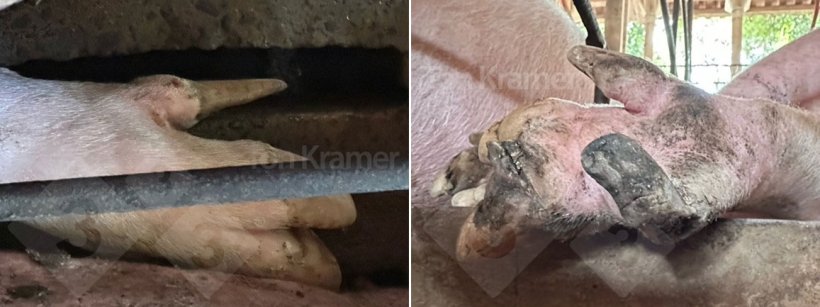
Water quality is an overlooked contributor: high total dissolved solids (TDS) in drinking water correlate positively with dew claw and toe overgrowth, likely through disruption of acid-base and hydroelectrolyte balance that affects horn growth patterns. Testing the chemical composition of water, including detailed mineral content, on problem farms is a simple and often-ignored diagnostic step.
Practical Action
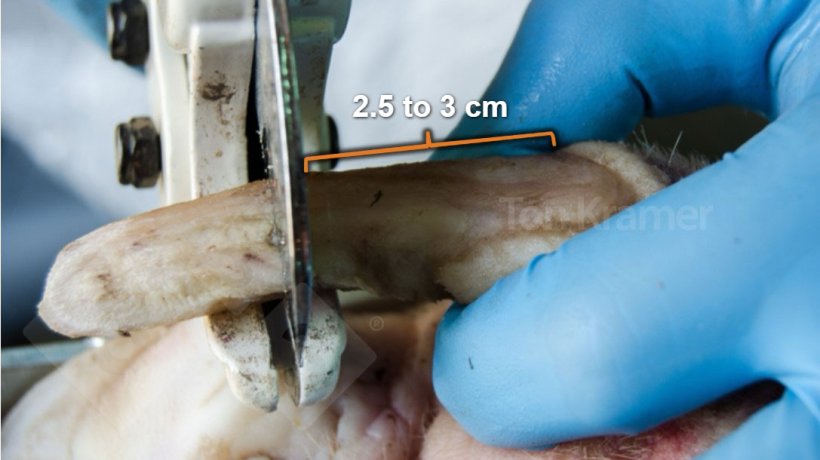
Trim dew claws routinely. The most practical approach is to trim sows in the farrowing crate while they are lying down, using a PVC pipe cutter (see the picture below) — a quick, low-stress procedure for both the animal and the handler.
Weak Pasterns: A Multifactorial Challenge
The pastern — the joint connecting the lower leg to the claw — is supported by ligaments and tendons that must withstand the increasing mechanical demands of a growing sow. When this support system fails, the sow walks on hyperextended pasterns, shifting weight onto sensitive structures such as the navicular bone (see the pictures). The result is pain, abnormal claw wear, and progressive lameness.
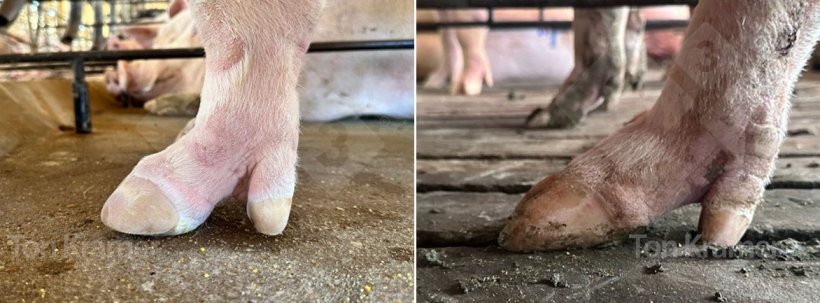
Pastern weakness is driven by several interacting factors: genetics, rapid growth rates that outpace tendon and ligament adaptation, nutritional gaps in macro- and trace minerals, and housing conditions that impose excessive biomechanical stress on immature joints.
Housing and Flooring: Environment Shapes Outcomes
Environmental stressors play a major role in biomechanical trauma. Replacing thin slatted steel floors with cast iron or well‑finished concrete slats can help prevent dew claw injuries by reducing sharp edges and gaps where overgrown dew claws may get caught and torn.
Additionally, be wary of flooring transitions; nursery gilts need to be moved off from the soft nursery plastic floor onto the concrete floor before they reach 25 kg of live weight to provide better wear of the claw horn. This will avoid claw overgrowth and, also, a biomechanical stress that immature joints and claws are not adapted to handle.
While exercise is beneficial, excessive space in group housing can increase the risk of slipping and splaying, which causes traumatic stress on supporting ligaments.
Nutrition: The Foundation of Structural Integrity
Nutrition is the most critical tool for supporting the ligaments and tendons that maintain pastern strength.
- Macro Minerals (P, Ca, Mg): Phosphorus is vital; a deficiency weakens the muscles that maintain bone position, leading to limb deviations and joint pain. Calcium and phosphorus deficiencies during peak growth periods reduce total bone mass and increase pressure on articular cartilage. Diets for growing gilts should follow the genetic supplier’s recommendations for standardized digestible phosphorus and maintain an appropriate calcium‑to‑phosphorus ratio to support optimal bone mineralization. Pay attention when using phytase or other phosphorus sources to keep the relationship. Magnesium is also essential as a cofactor for collagen synthesis.
- Trace Mineral Synergy: Tendon and ligament strength depend heavily on a complex network of trace minerals. The most effective approach involves multiple nutrients working together rather than a single-mineral strategy. Organic trace mineral forms show superior bioavailability over inorganic sources.
- Copper: Essential for the cross-linking of collagen and elastin fibers, which provides bone-breaking strength and structural integrity to tendons.
- Zinc: Acts as a growth factor and anti-inflammatory agent, promoting tissue repair and regeneration.
- Manganese: A key cofactor for enzymes involved in cartilage formation and antioxidant mechanisms.
- Chromium: Supports glucose metabolism, providing the energy needed for collagen production and tissue repair.
- Selenium: Mitigates oxidative stress and inflammation while promoting stem cell differentiation into tendon cells.
Genetics: Select for Soundness
Weak pasterns have a moderate heritability, making them a prime candidate for improvement through selective breeding. Include pastern posture evaluation, both front and rear, in gilt selection criteria alongside other leg structure traits. Early culling of gilts with poor pastern angles before entry into the breeding herd is far more cost-effective than managing the consequences across multiple parities.
A Practical Management Checklist
- Assess dew claws at every farrowing and trim when overgrown. Use a PVC cutter with the sow in lateral recumbency.
- Score pastern and leg structure in gilt selection and maintain records.
- Test drinking water TDS twice per year; investigate on farms with unexplained claw overgrowth.
- Ensure adequate digestible phosphorus and calcium at the late nursery/early fattening transition.
- Use high-bioavailability (organic) forms of Cu, Zn, Mn, Se, and Cr.
- Evaluate flooring; consider replacing slatted steel with cast iron.
- Manage flooring transitions between production phases. Don’t keep gilts on plastic floors above 25 kg of live weight and pay attention to the gaps on slatted floors (no more than 18 mm for gilts).
- Flag and cull sows with severe pastern deviation rather than carrying them through repeated parities.
Conclusion
Dew claw lesions and weak pasterns are preventable and manageable when addressed systematically. Combine routine trimming, sound flooring, optimized macro- and trace mineral nutrition, and genetic selection for structural soundness. Operations that embed these practices into standard protocols consistently achieve better sow welfare, longer productive lives, and stronger reproductive performance.
